gbf-wiki (Japanese wiki)GameWithKamigameHuiji Wiki (Chinese wiki)GBF Asset LookupGBF Animation Player
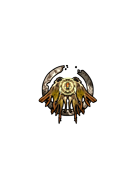
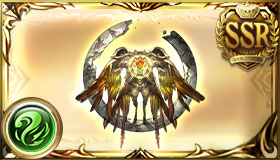
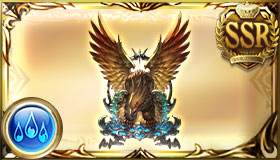
As a pillar of the world, the Faceless of the Tetramorph beats its lustrous white wings to usher in a new order. The Faceless's descant, a fragment of the prophetic hymn, joins the other heralds' songs in calamitous harmony. From its otherworldly aria manifests a dark curtain of eternal sorrow, which shall plunge all souls into madness.
Massive Wind damage to a foe. All allies gain Wind ATK UpWind ATK is boosted Duration: 2.5 turnsApplied during the attack phase. On the next turn, it'll have 2 turns remaining..
Amplify normal attack damage by 8% for Axe- and Staff-specialty allies. Amplify normal attack damage by 15% for Axe- and Staff-specialty allies in ArcarumArcarum: The World Beyond Replicard Sandbox.
In Christian art, the tetramorph is the union of the symbols of the Four Evangelists, derived from the four living creatures in the Book of Ezekiel, into a single figure or, more commonly, a group of four figures. Each of the four Evangelists is associated with one of the living creatures, usually shown with wings. The most common association, but not the original or only, is: Matthew the man or angel, Mark the lion, Luke the ox, and John the eagle.
The animals associated with the Christian tetramorph originate in the Babylonian symbols of the four fixed signs of the zodiac: the ox representing Taurus; the lion representing Leo; the eagle representing Scorpio; the man or angel representing Aquarius.
In Western astrology, the four symbols are associated with the elements of, respectively Earth, Fire, Water, and Air. The creatures of the Christian tetramorph were also common in Egyptian, Greek, and Assyrian mythology.
A tetramorph is a symbolic arrangement of four differing elements, or the combination of four disparate elements in one unit. The term is derived from the Greek tetra, meaning four, and morph, shape.
Vent de l'Ange is French for "Wind of the Angel".
Haton seems to be a combination of Hache and Bâton, French for "Axe" and "Staff".
スタックス ("stax"), the Japanese name of the skill, seems to be the combination of staff and axe.